
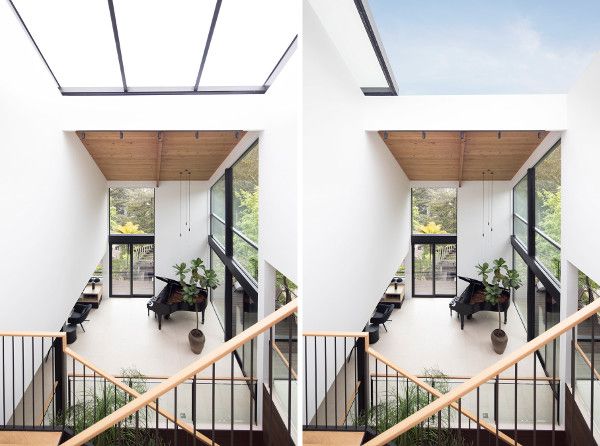
Rollamatic Roofs, Inc. has installed more than 1,500 retractable roof systems in the San Francisco Bay Area since 1958. That’s not a marketing number. It’s a fact about where we live and where we work. Our headquarters is in Rodeo, CA, 25 miles northeast of San Francisco. The first system we ever built went into a Diamond Heights home in San Francisco, designed by our founder, architect David S. Miller. When Bay Area homeowners and commercial operators search for a retractable roof in the Bay Area, they are searching for us, whether they know our name yet or not.
This post is for people who are past the “what is a retractable roof” stage. You already know you want one. You want to know who to trust to design and build it, whether the Bay Area climate is right for it, and what the process looks like from here. Those are the right questions, and we can answer every one of them from direct experience.
Why the Bay Area Is One of the Best Markets for Retractable Roofs
The Bay Area gets roughly 260 sunny days per year. That’s an enormous amount of usable sky, and most Bay Area homes and commercial spaces aren’t taking full advantage of it. At the same time, marine layer mornings, afternoon wind off the Bay, and winter rain are real. The weather here isn’t extreme, but it is variable. That variability is precisely what makes a retractable roof such a practical investment.
A fixed skylight gives you light when the weather cooperates and a sealed ceiling when it doesn’t. A Rollamatic retractable roof gives you a choice. Open it on a clear October afternoon. Close it when the fog rolls in off the Marin headlands. The system responds to your preference or, with an optional rain sensor, responds automatically. Unlike regions that deal with sustained freezing temperatures or hurricane-force wind loads, the Bay Area climate is gentle enough that a retractable roof can realistically be open more days than it’s closed.
For homeowners, that means an atrium or courtyard that functions as living space for most of the year. For restaurant and hospitality operators, it means year-round outdoor seating — a significant revenue multiplier in a market where outdoor dining is part of the culture. The Bay Area isn’t just a good market for retractable roofs. It’s one of the best markets in the country.
What 1,500+ Bay Area Installations Taught Us
Nearly 70 years of Bay Area installations have taught us things you can’t learn from a specification sheet. We know which microclimates require extra attention to wind load in the design phase. We know how San Francisco’s notoriously dense urban fabric affects permitting timelines and structural access. We know that a home in Marin County, with its particular combination of fog, salt air, and hillside terrain, has different engineering demands than a home in Palo Alto’s flat Eichler neighborhoods.
That local knowledge shows up in every project we design. When we assess a site, we’re not starting from zero. We’re drawing on decades of installations across Contra Costa County, Marin County, San Mateo County, Santa Clara County, and San Francisco itself. We know the structural realities. We know how to develop shop drawings that move through permit review efficiently because we’ve done it hundreds of times in California jurisdictions.
Our direct drive system uses on-board motors with no chains, pulleys, or cable mechanisms. It was chosen in part because it performs exceptionally well in environments with salt air and temperature cycling. The galvanized or stainless steel frames (determined based upon proximity to the ocean) we use on every system resist corrosion in coastal conditions better than lighter-gauge aluminum alternatives. These aren’t abstract engineering preferences. They reflect almost 70 years of real-world performance data in the Bay Area market.
Eichler Homes and Retractable Roofs: A Natural Fit
Joseph Eichler built more than 11,000 homes in California, and the Bay Area is home to the largest concentration of them. Palo Alto, San Jose, Sunnyvale, Concord, San Rafael, and San Francisco’s Diamond Heights neighborhood all have established Eichler communities. Most of these homes were designed around a central atrium, an open courtyard at the heart of the house intended to dissolve the boundary between indoors and outdoors. It’s one of the most elegant architectural ideas in mid-century California residential design.
The problem is that an open atrium in San Francisco or Marin has a limited season. Fog and rain close it off for months at a time. Many Eichler owners have covered their atriums with fixed glass or polycarbonate panels to gain year-round use, but in doing so, they’ve given up the thing that made the atrium special: the sky. A Rollamatic residential atrium retractable roof gives it back. When the weather is right, the roof opens fully. The sky returns. The atrium becomes what Eichler an home was intended to be.
We’ve installed retractable atrium roofs in Eichler homes across the Bay Area for decades. We understand the architectural character of these homes, and we design systems that complement rather than compromise them. Our single-section and bi-parting configurations work well with Eichler atrium geometries. Our low-profile galvanized steel frames integrate cleanly with the flat rooflines and post-and-beam structures these homes are known for. If you own an Eichler and you’ve been thinking about what to do with your atrium, you’ve found the right company.
How Much Does a Retractable Roof Cost in the Bay Area? Here’s What Drives It.
Retractable roof cost in Bay Area California projects varies based on four primary factors: the size of the opening, the configuration complexity, the extent of structural preparation required, and the materials selected. We don’t publish standard pricing because no two projects are identical. Every system is custom-designed and engineered for its specific site.
Bay Area projects often involve additional structural preparation compared to more straightforward markets. Dense urban lots in San Francisco or hillside homes in Marin may require crane access planning, seismic considerations, or reinforcement of existing roof structures. These factors affect both cost and timeline. We account for all of them during our Confirm phase, before you’ve committed to anything, so there are no surprises when fabrication begins.
The right starting point is a consultation. We’ll assess your site, understand your goals, and give you a clear picture of scope and budget before any work begins. There is no obligation and no cost for that initial conversation. You can reach us at 800-345-7392 or request a consultation online. We also recommend reviewing the full benefits breakdown on our website to understand the long-term value a retractable roof delivers, including energy savings, HVAC load reduction, and property value impact.
San Francisco Building Codes and What to Know Before You Plan
California has among the most detailed building code requirements in the United States, and San Francisco and other Bay Area municipalities add local amendments on top of the state code. For retractable roof projects, the relevant considerations typically include structural load documentation, electrical permitting for the motor circuit, and in some neighborhoods, design review for projects visible from the street or in designated historic districts.
Rollamatic produces permit-ready shop drawings as part of every project. These drawings specify the exact dimensions, materials, and structural details of the curb, flashing, and roof system. They’re designed to facilitate permit review, not complicate it. Our designs have been approved by California building departments for nearly 70 years and we know what reviewers look for. We hold California Contractors State License Board license #840500, which is required for this type of work in the state.
If your project involves a historic district such as Pacific Heights or Alamo Square, additional design review may apply. We’ve navigated these requirements before. The key is to begin the permit process early and with complete documentation. Our shop drawings are written to support that process. For current California building code information, the California Building Standards Commission maintains the official state code resources.
From Rodeo to the Rest of the Bay: Rollamatic’s Local Coverage Area
Our fabrication facility is in Rodeo, CA in Contra Costa County, which puts us within an hour of virtually every Bay Area project site. San Francisco is 30 miles west. Marin County is 20 miles northwest. The South Bay, including Palo Alto, Sunnyvale, and San Jose, is an hour south. We install throughout this region and have done so continuously since 1958.
Local installation has real advantages. Our team arrives at your site without a multi-day logistics operation. Warranty calls and follow-up visits don’t require flights or extended travel schedules. When we say we stand behind our water-tight guarantee and our five-year warranty, we mean it in the most practical sense: we can be on your roof quickly if something needs attention. That’s not something a Connecticut or Pennsylvania manufacturer can offer a Bay Area homeowner.
We serve residential and commercial clients throughout the Bay Area, including San Francisco, Marin County, Contra Costa County, Alameda County, San Mateo County, and Santa Clara County. View completed local projects in our project gallery and read more about our history and team on our About page.
Request a Site Visit: Here’s How the Process Starts
The first step is a conversation. We’ll ask you about your space, your goals, and the rough dimensions of the opening you’re considering. From there we schedule a site assessment, virtual or in-person, to evaluate the structural conditions and confirm that a retractable roof is the right fit. You’ll receive a clear proposal with pricing and a realistic timeline before any fabrication begins.
Most Bay Area residential projects move through our six-step process in four to five months from initial consultation to installation. Commercial projects vary based on scope. The sooner you start the conversation, the sooner you have a usable sky above your atrium, your courtyard, or your restaurant patio.
Rollamatic Roofs, Inc. has been designing and building retractable roofs in the San Francisco Bay Area longer than any company in this market. If you’re looking for a retractable roof in the Bay Area from someone who truly knows the region, we’re the team to call. Request a free consultation at 800-345-7392 or use our online contact form to get started.
Frequently Asked Questions
How much does a retractable roof cost in the Bay Area?
Retractable roof cost in Bay Area California projects varies based on the size of the opening, configuration type, structural preparation required, and materials. Every Rollamatic system is custom-engineered, so pricing is determined after a site assessment. Bay Area projects sometimes involve additional structural preparation due to urban density, seismic considerations, or hillside access. Contact us at 800-345-7392 to discuss your specific project.
Does Rollamatic install retractable roofs in San Francisco?
Yes. San Francisco is our founding market. The first Rollamatic system was installed in Diamond Heights in 1958. We’ve completed residential and commercial installations throughout the city, including in neighborhoods with dense urban lots and design review requirements. We hold California Contractors State License Board license #840500 and produce permit-ready shop drawings for every project.
Is a retractable roof suitable for the Bay Area climate?
The Bay Area is one of the best climates in the United States for a retractable roof. With roughly 260 sunny days per year, there are far more open-roof days than closed ones. Our systems handle marine layer, moderate rain, and coastal wind conditions reliably. Optional rain sensors automate closing when precipitation is detected. Homeowners and commercial operators throughout the Bay Area use their Rollamatic roofs year-round.
Can a retractable roof be added to an Eichler atrium?
Yes, and this is one of our most common Bay Area residential applications. Most Eichler homes were designed around central atriums intended to connect the interior to the sky. A Rollamatic residential atrium retractable roof restores that connection while providing year-round weatherproof use. We’ve installed systems in Eichler homes across Palo Alto, San Jose, Concord, San Rafael, and San Francisco, and we understand the architectural character of these homes.
How long does a Rollamatic retractable roof last?
Rollamatic systems installed in the 1960s are still in regular operation today. Our galvanized and stainless steel frames resist corrosion in coastal conditions, and our direct drive system with no chains, pulleys, or cable mechanisms minimizes the mechanical complexity that leads to failure in lesser systems. Every Rollamatic system comes with a five-year warranty and an exclusive water-tight guarantee. With proper maintenance, a well-installed system will serve you for decades.
Does Rollamatic handle permits for Bay Area retractable roof projects?
We produce permit-ready shop drawings as part of every project, specifying the structural, material, and waterproofing details that California building departments require. We’ve worked with Bay Area jurisdictions for almost 70 years and understand local code requirements. We hold CSLB license #840500. While the permit application is typically filed by the general contractor or property owner, we provide the documentation that makes approval straightforward.